Beyond the Past and the Present;
Szpitalna street, Kraków
The exhibition was realized in cooperation with the Małopolska Institute of Culture and presented as part of the 21st Małopolska Cultural Heritage Days.
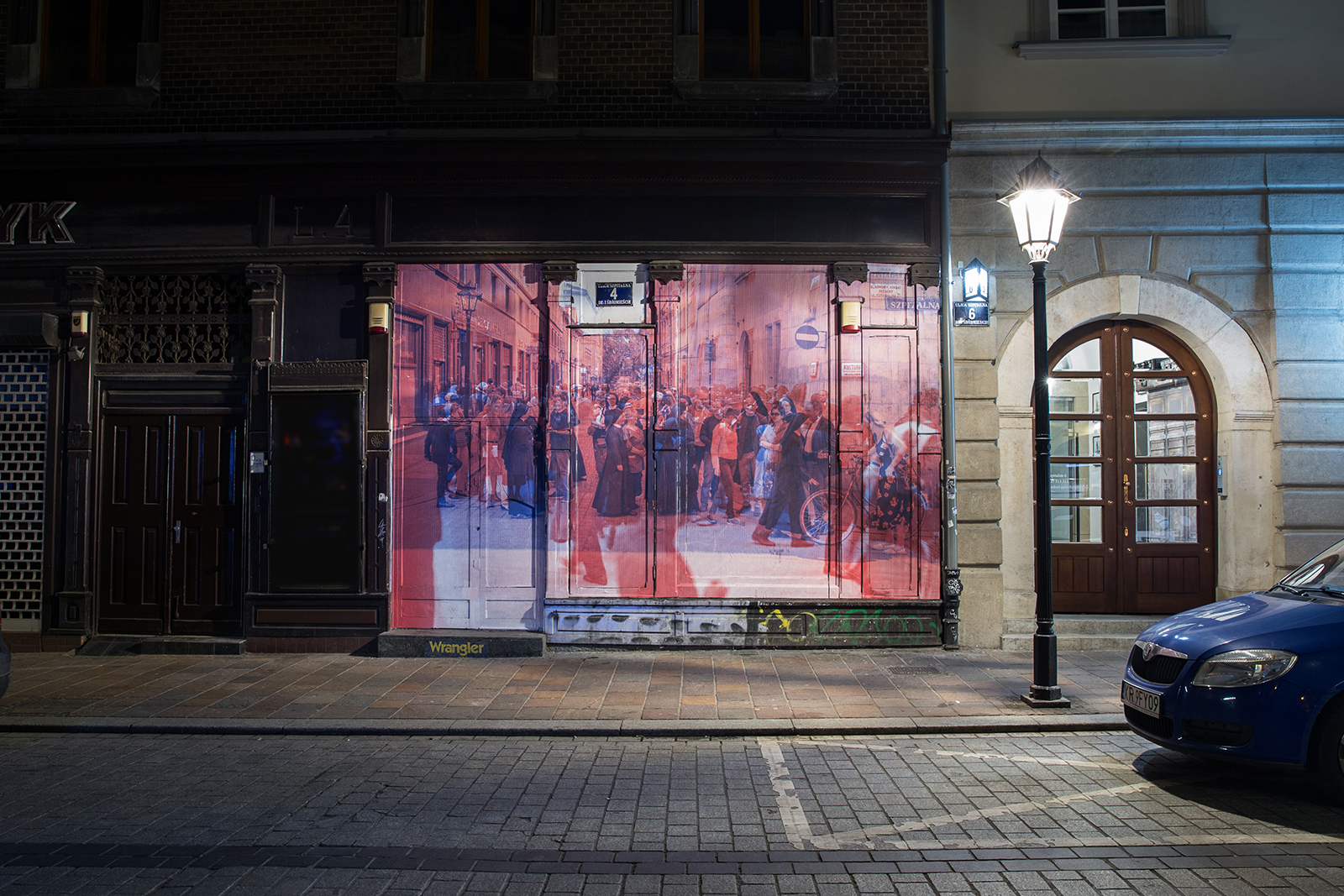
The project comprised 13 works installed on the façades of eight tenement houses along Szpitalna Street. The elevations featured large-format photographic collages created by combining archival and contemporary photographs depicting people and situations connected with this part of the city. The project also extended into the space of the Small Market Square, forming a coherent visual narrative dispersed throughout the urban environment.
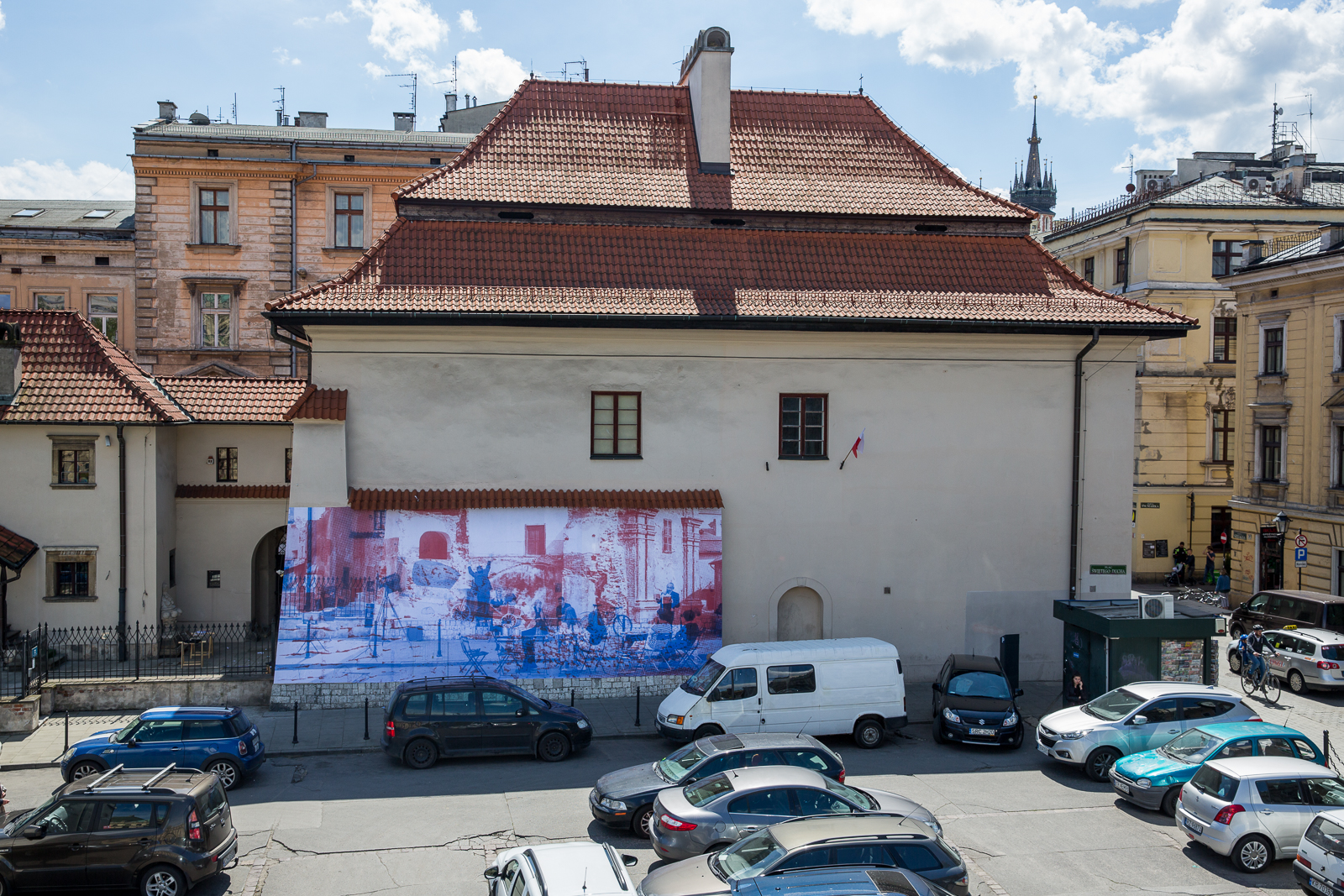
The aim of the project was to draw attention to the heritage of this part of Kraków and to the history of the Monastery and Hospital of the Order of the Holy Spirit, which operated in this area until the end of the 19th century. The monastery buildings were demolished, and their significance has gradually faded from the city’s collective memory.
Despite its location in close proximity to Kraków’s main tourist routes, Szpitalna Street has retained the character of a local enclave. Its spatial structure is shaped both by the intensively used areas of the Small Market Square and by the surroundings of The Holy Spirit Square, where a hospital once stood—its demolition strongly opposed by Jan Matejko. Nevertheless, the City Council ordered the historic building to be torn down, replacing it over a hundred years ago with the Municipal Theatre, later named after Juliusz Słowacki. The theatre’s history began in 1901 with the premiere of The Wedding by Stanisław Wyspiański.
The project Beyond the Past and the Present; Szpitalna Street is embedded in the artistic practice of Bartolomeo Koczenasz, based on long-term observation of the city and work with photographic material. By juxtaposing images from different temporal orders, the artist examines the relationships between history, architecture, and the everyday presence of people, creating a space in which the past and the present coexist simultaneously.
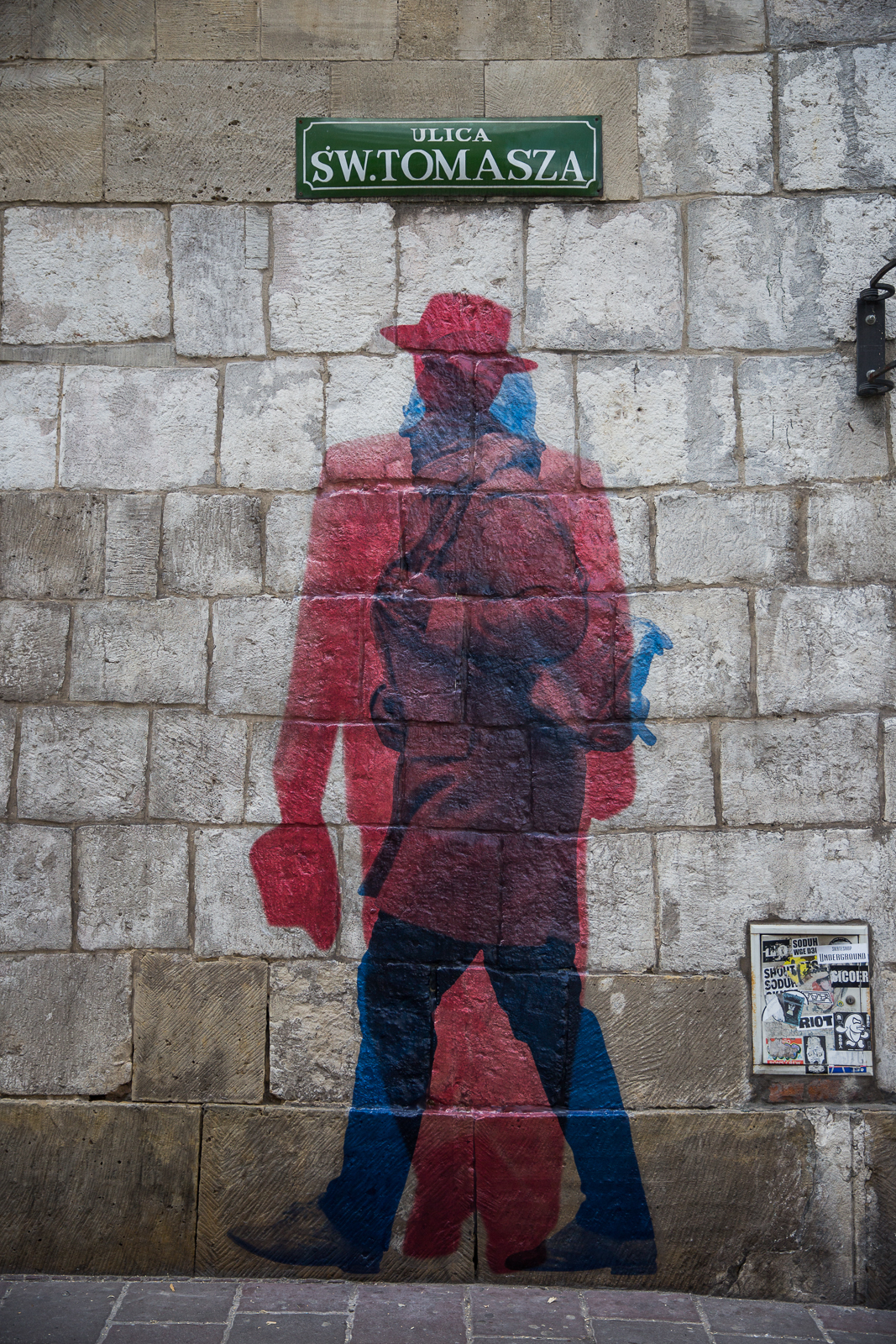
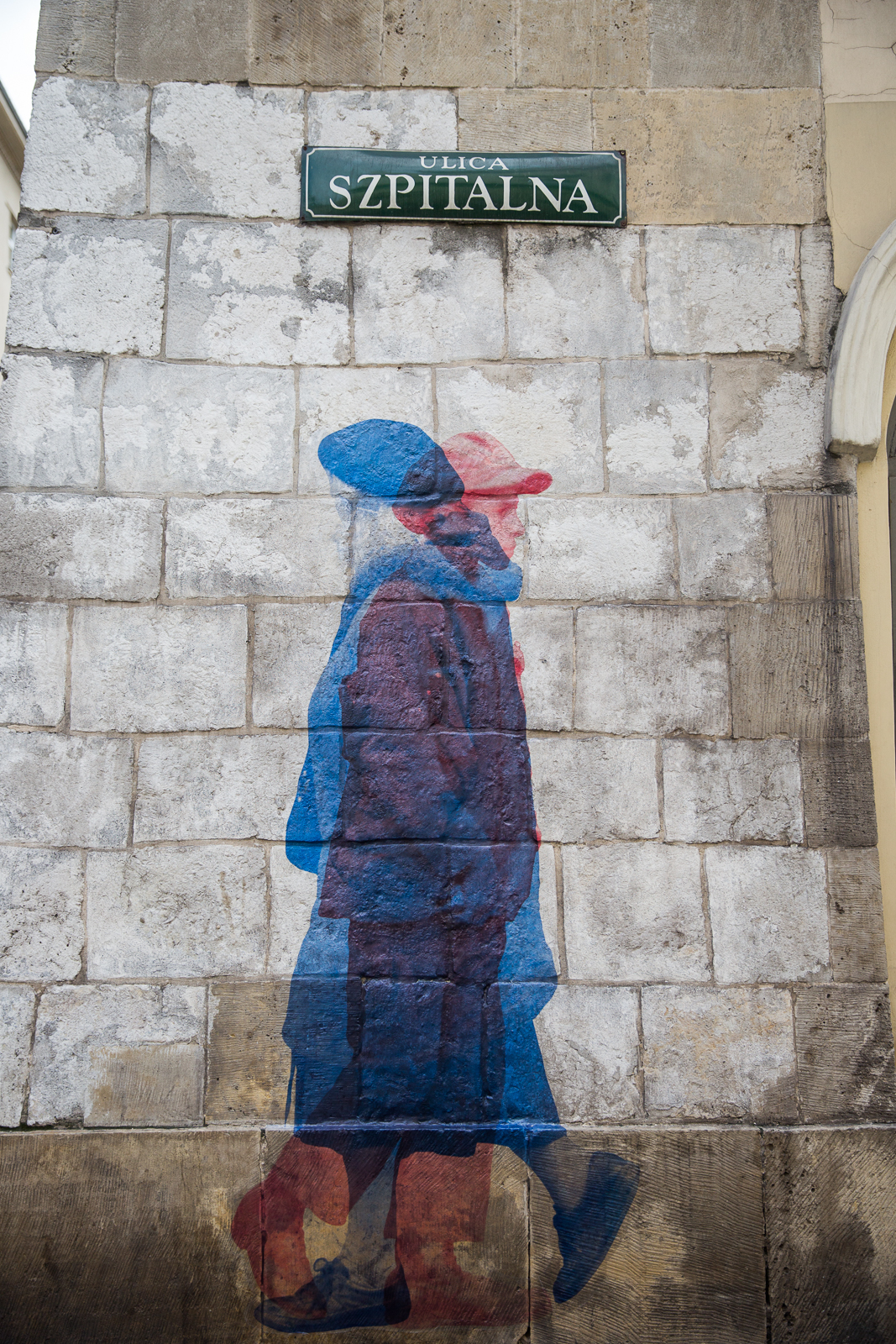
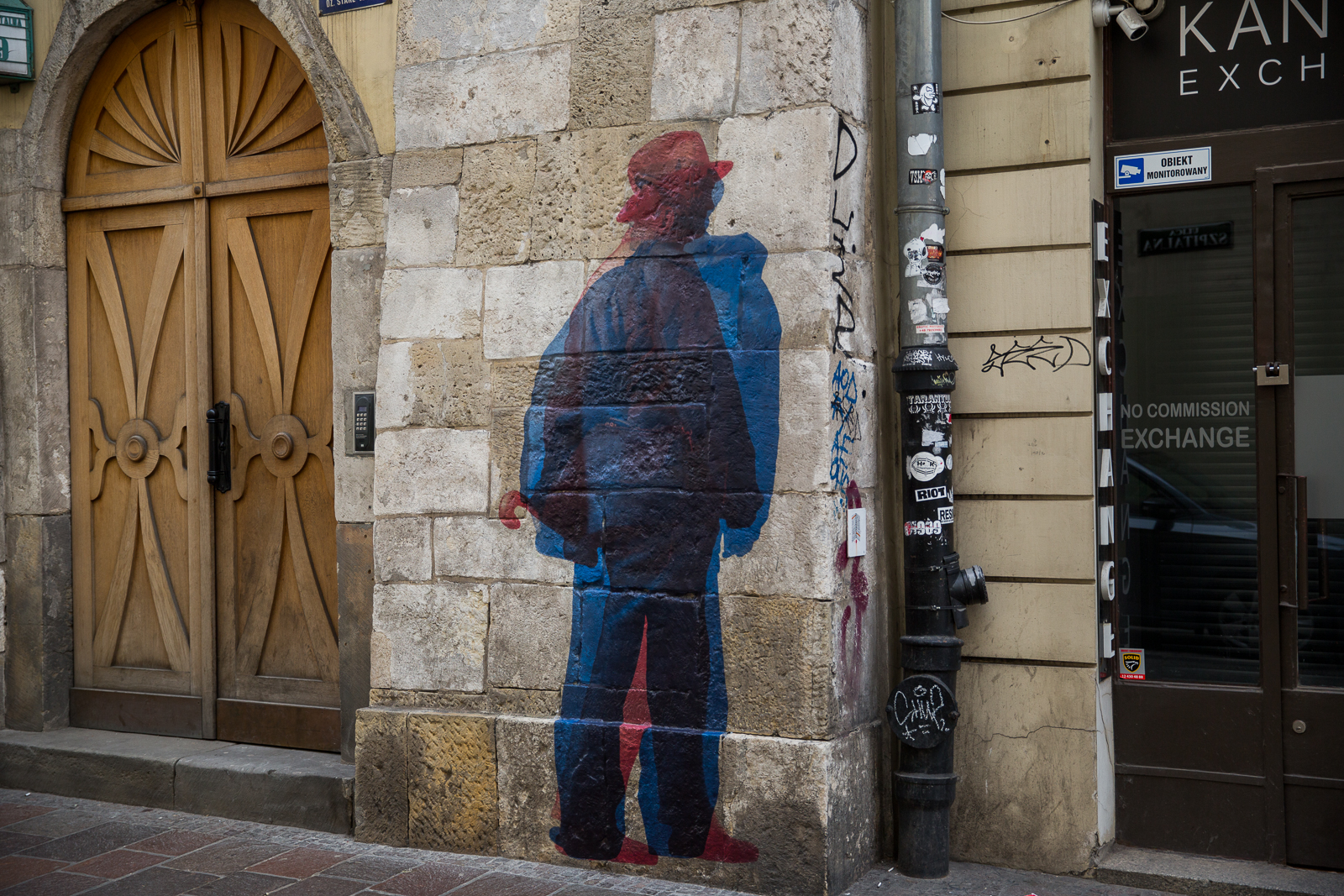
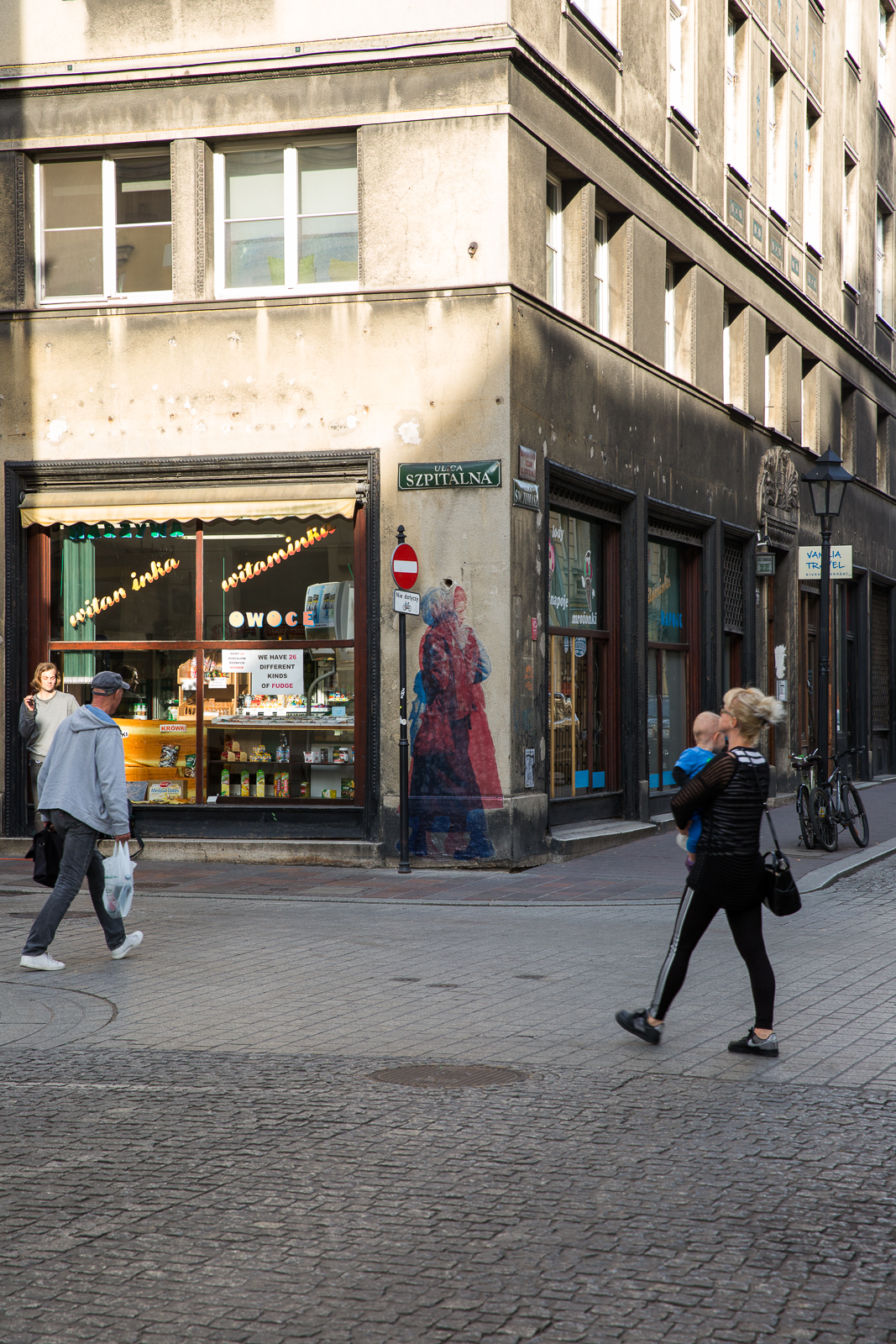
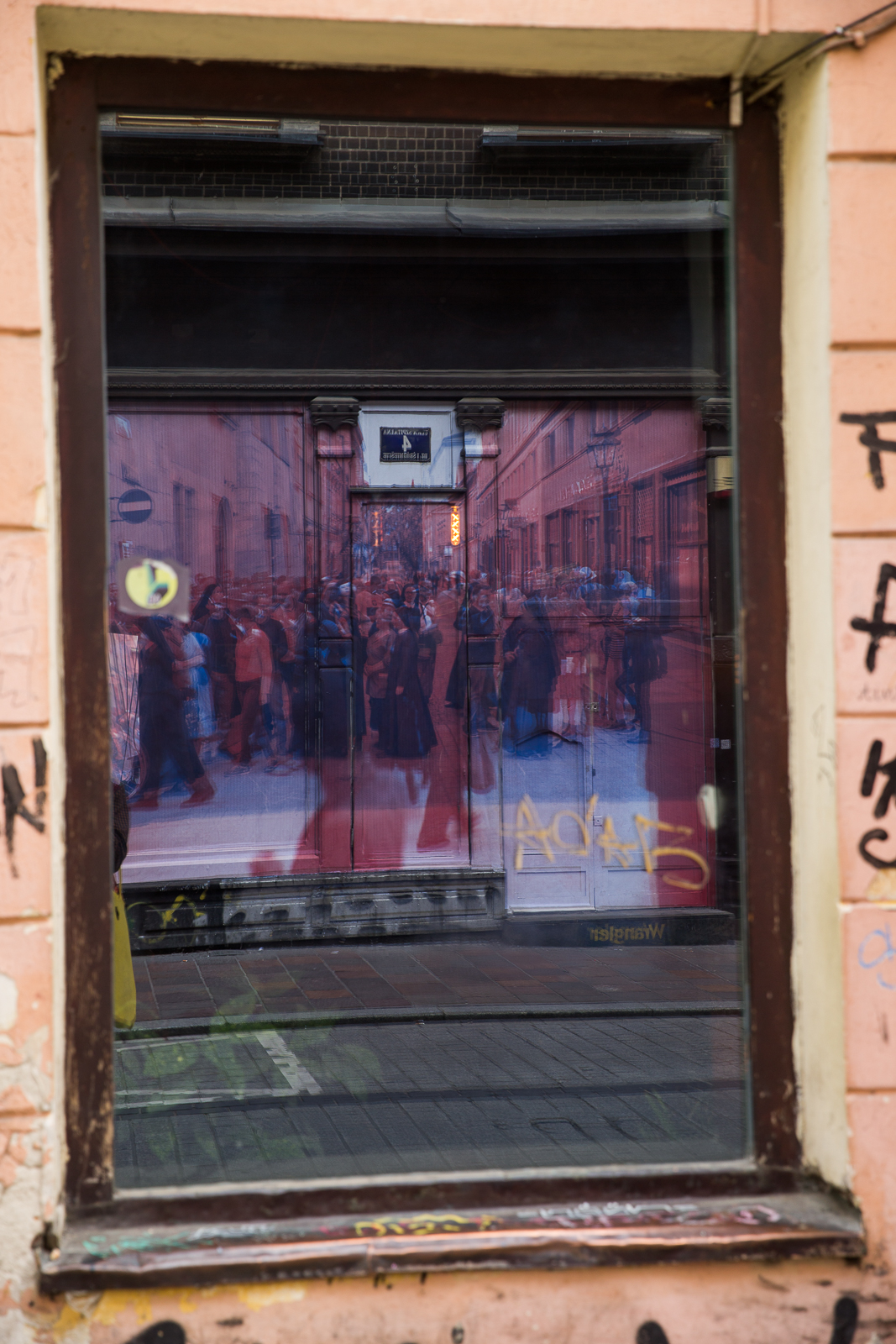
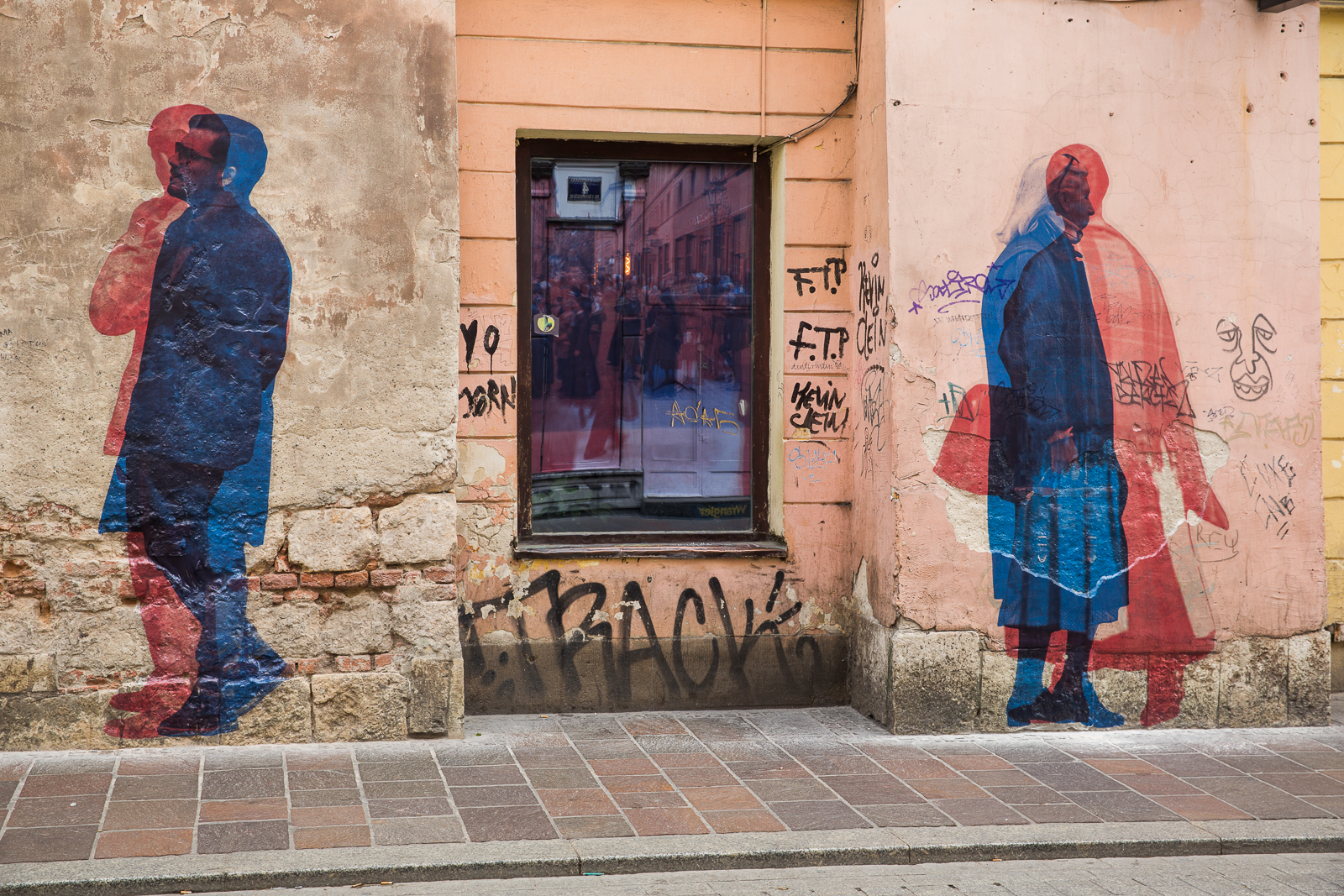
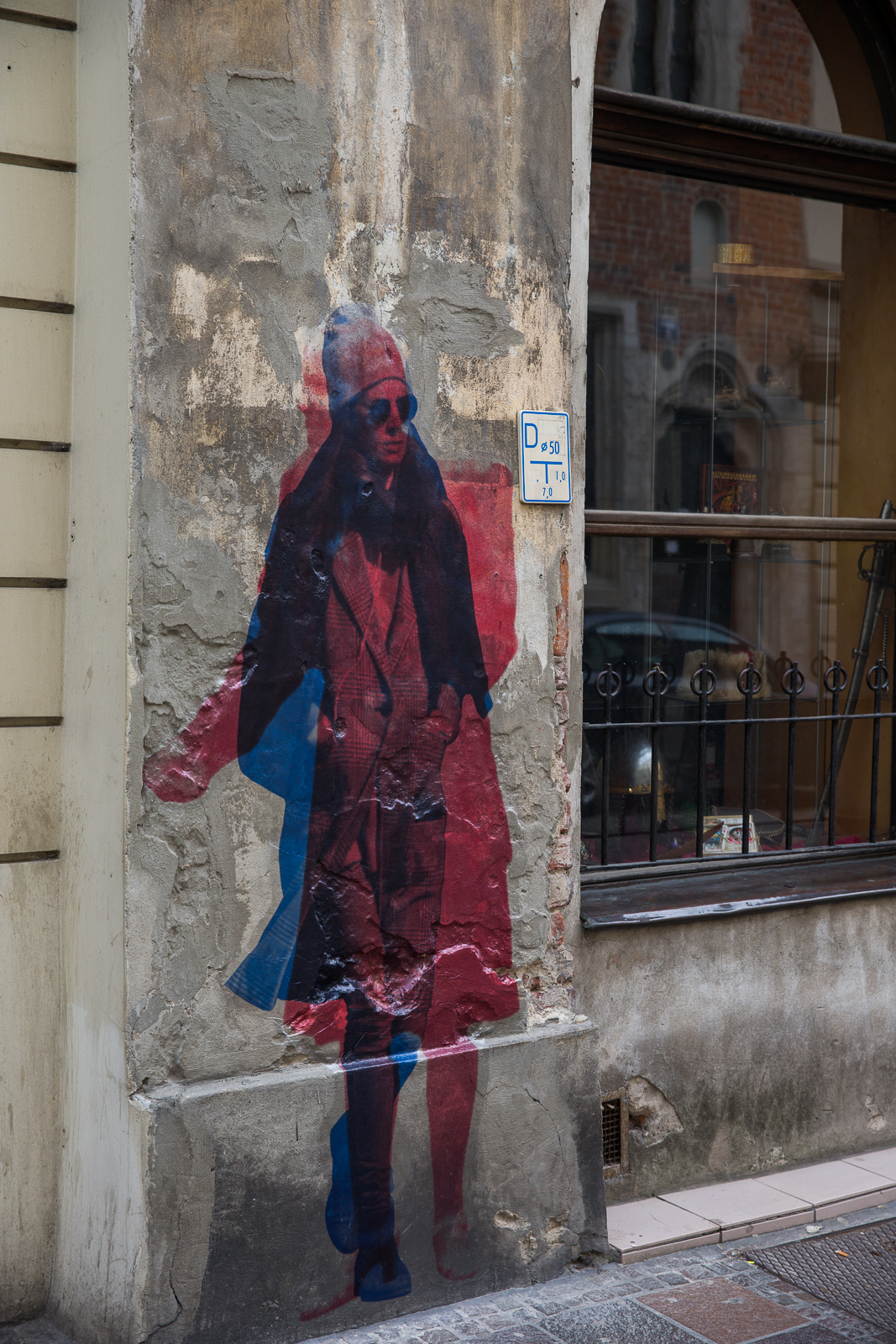
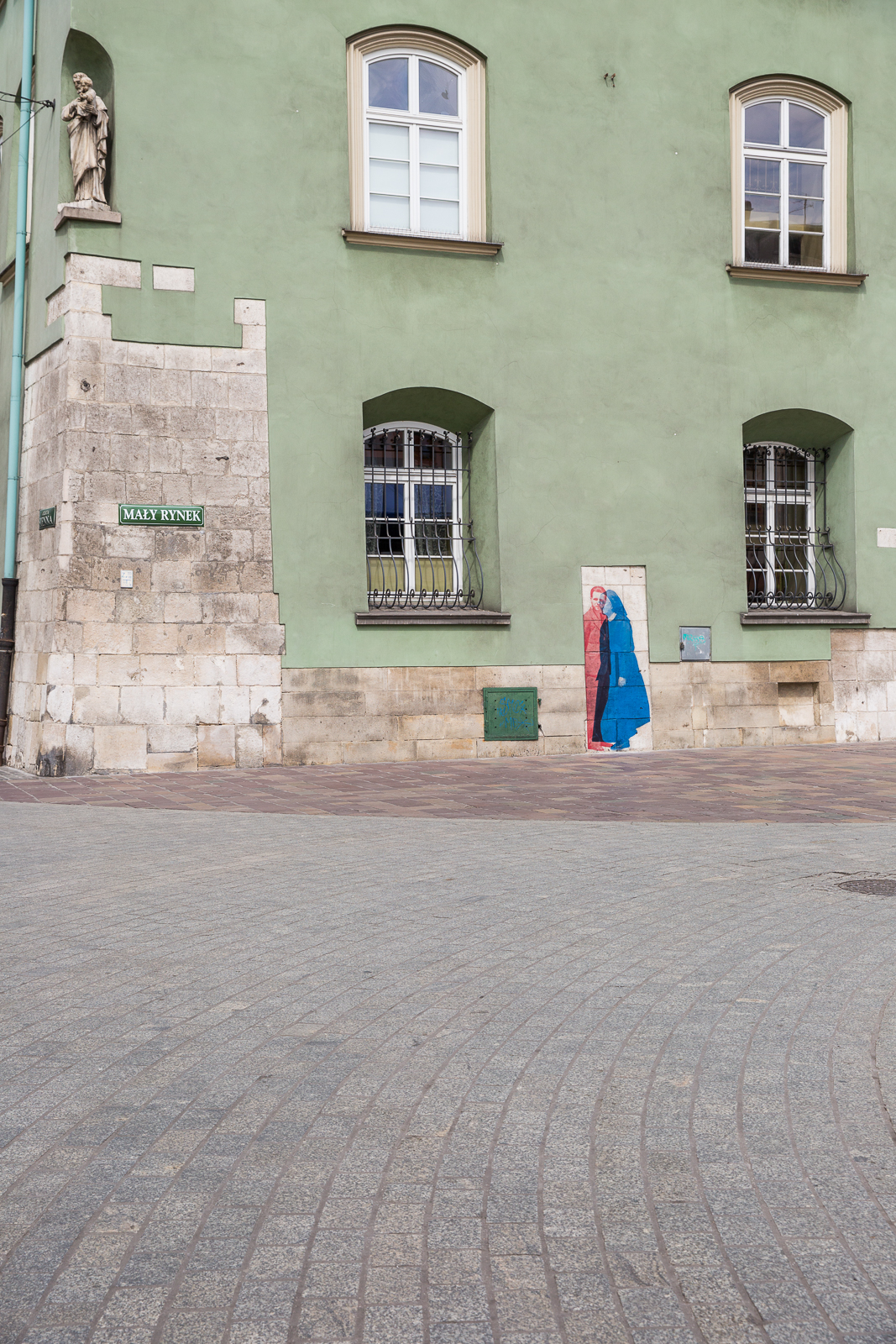
In a place beyond the past and the present, truer histories emerge
It is located close to the city’s central routes, yet crowds are absent. It enjoys relative calm and observes the life of a local enclave. Its beginning is marked by the Small Market Square and a pub where crowds of tourists in shorts, at any time of the year—day and night—consume beer and sausages. Its end, meanwhile, is defined by The Holy Spirit Square—this is where a ruined hospital once stood, whose demolition Jan Matejko so vehemently opposed. Nevertheless, the City Council ordered the monument to be demolished, commissioning in its place, over a hundred years ago, the Municipal Theatre, later named after Juliusz Słowacki. Its history opened in 1901 with the premiere of The Wedding by Stanisław Wyspiański.
Between these extreme points of the local geography: a vacant former jeans shop, a fountain pen repair workshop, an antiquarian bookshop, a female religious order, a grocery store in a modernist building of the former Savings and Credit Bank, the House under the Cross, which once housed the first headquarters of the Association of Polish Artists… Everything appears similar, whether it is 1919 or 2019. Only the people are different—and dressed differently.
The street has retained to this day a trace of local uniqueness, which in the centers of European metropolises is often trampled by tourist traffic. People who, despite the inconveniences, continue to live in the heart of the city have shaped this enclave, its atmosphere, and ultimately testify to its identity. Art may not explain this paradox, but it efficiently reveals evidence of this uniqueness.
Szpitalna Street, if we allow it to be so, will reveal itself—just as in the title of Bartolomeo Koczenasz’s new project—as a space beyond the past and the present. It is an ideal site for research conducted by the artist, who with anthropological commitment reveals unknown histories built by anonymous people. […] Primarily those who belong here: antiquarian booksellers, nuns, cleaners.
Therefore, the project Beyond the Past and the Present. Szpitalna Street, prepared as part of the Małopolska Cultural Heritage Days, belongs to the set of afflictions that modernity and contemporaneity have brought upon photography. In his intention, the artist analyzes the history of the street—specifically its people—by tracing their relationships with architecture and urban planning, that is, their ordinary rhythm of everyday existence, interesting to both sociologists and artists alike. Koczenasz is interested in history and identifies it with buildings, the street, and the people present there. He recognizes the potential of places of prosaic everyday life, which he finds both today and in the iconography of Szpitalna Street.
17 April 2019, Krzysztof Siatka
O wystawie: Małopolski Instytut Kultury